Why Grooming Your Horse Matters
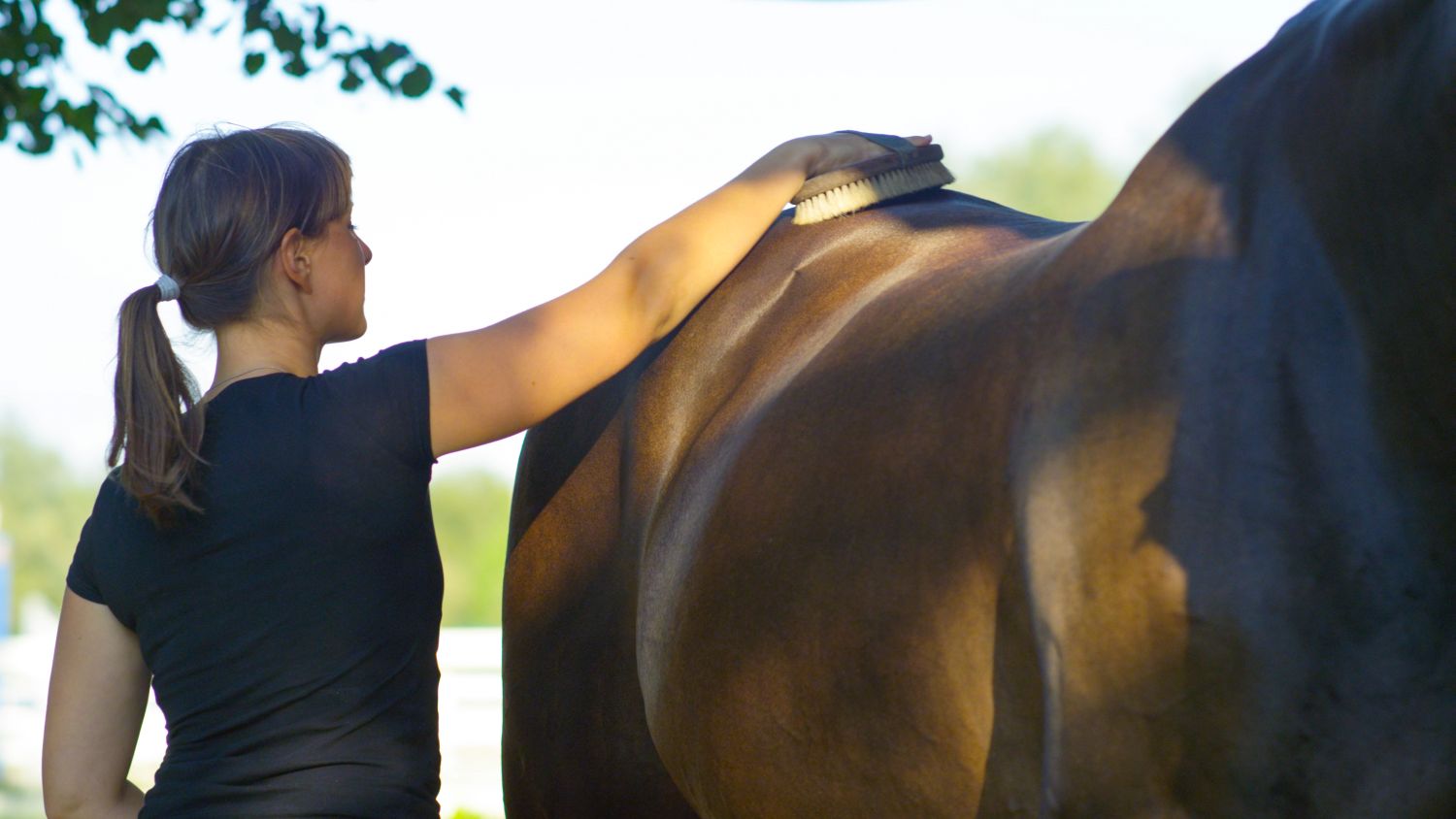
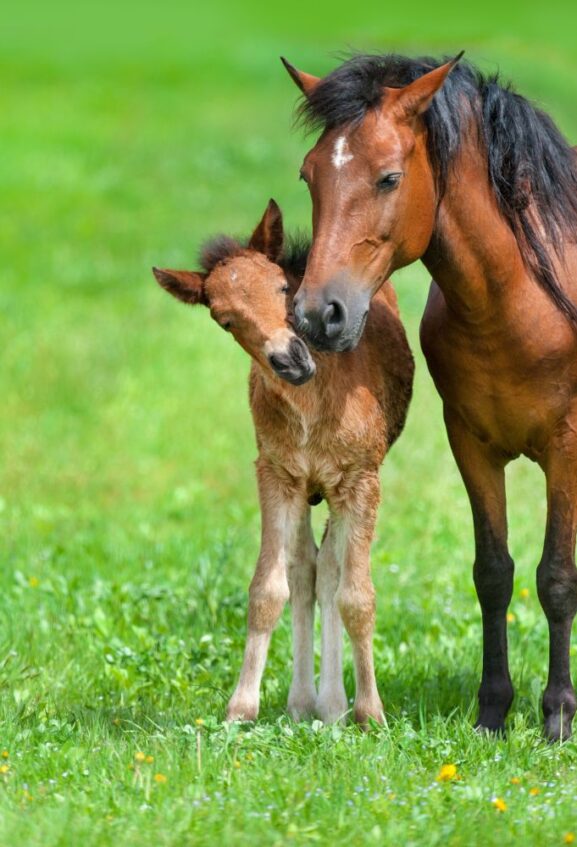
Grooming your horse regularly is vital for their physical and emotional health. Horses are herd animals, and mutual grooming is one way they bond with each other. By grooming your horse, you’re mimicking this behaviour and building trust. It’s also the perfect time to check for cuts, swelling, heat, or signs of discomfort. Noticing a change in your horse’s coat, skin, eyes, hooves, or general behaviour during grooming can help you catch potential health issues early.
Grooming improves skin health, promotes a shiny coat by distributing natural oils, and removes sweat, dust, and debris. For stabled horses, a daily grooming routine helps compensate for the lack of natural rubbing against trees or fences.
Preparing to Groom Your Horse
Before you begin, make sure your horse is securely tied using a quick-release knot. This keeps everyone safe and allows for an easy release if your horse panics. Use a well-ventilated, quiet area with space to move around. Keep a grooming kit nearby and organised – a sturdy bucket or grooming box will do.
Essential items in your grooming kit include:
- Rubber curry comb
- Body brush (hard brush)
- Soft brush (face brush)
- Mane and tail comb
- Hoof pick
- Two sponges (different colours for face and dock)
- Stable rubber or cloth
- Sweat scraper (for bathing)
It’s a good idea to have a separate set of brushes for each horse to avoid spreading infections.
Explore our equestrian supplies shop for your essential grooming products.
Step-by-Step: How to Groom a Horse
1. Start with the Hooves
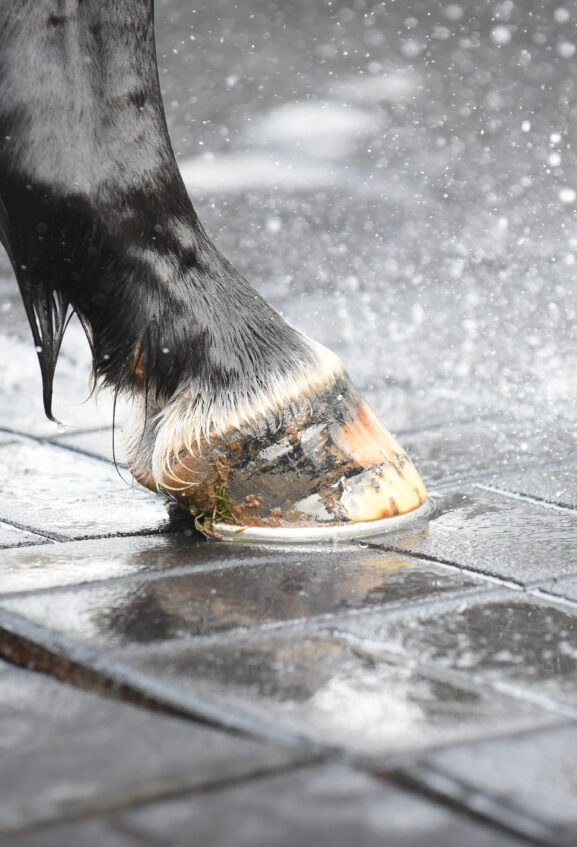
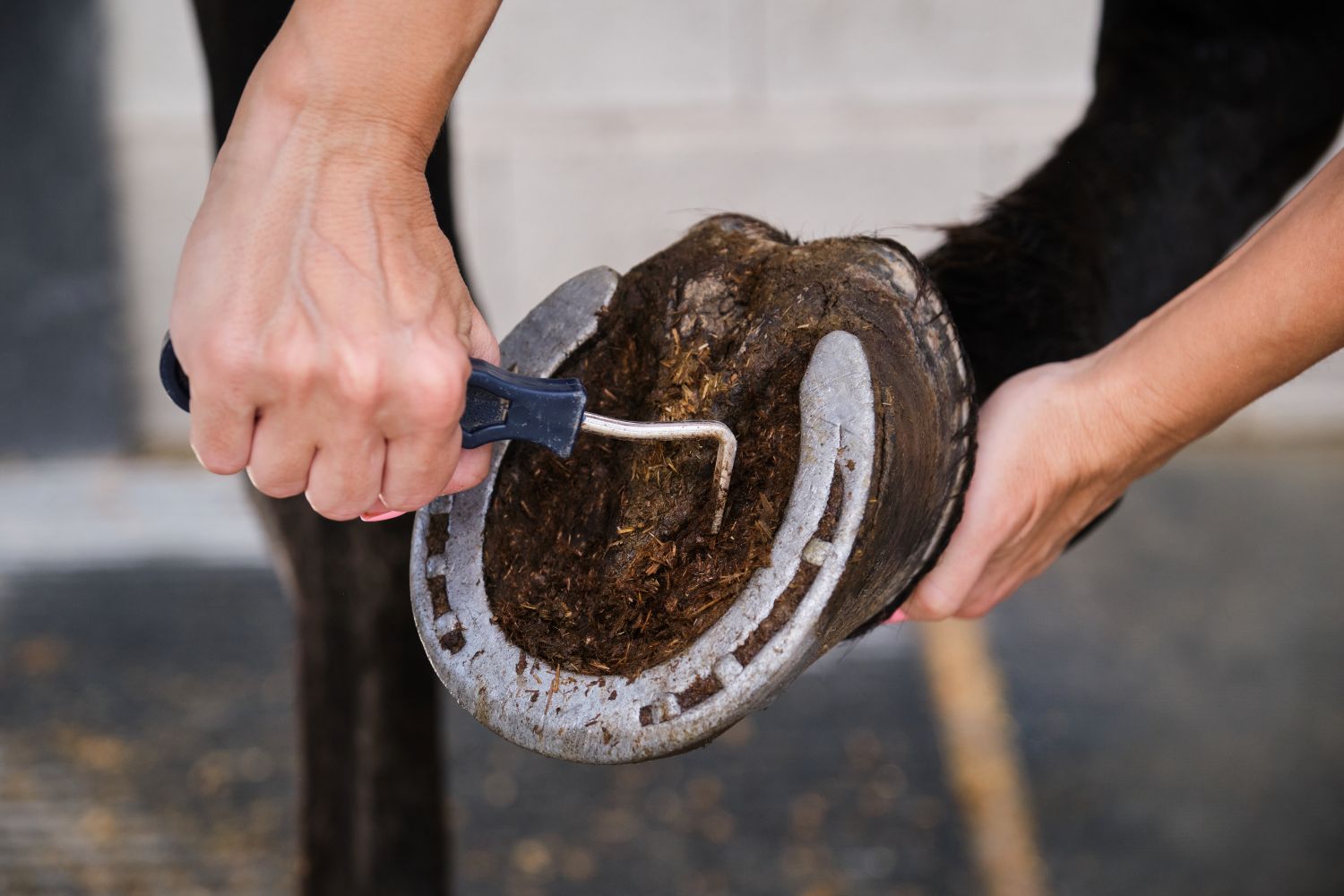
Clean your horse’s hooves first to remove dirt, stones, and manure that could cause discomfort or lead to thrush. Run your hand down the leg to signal the horse, then use a hoof pick to gently clean out the grooves around the frog. Avoid using too much pressure, and always check the shoes if your horse is shod.
2. Use a Curry Comb for Caked Mud and Loose Hair
Use a rubber curry comb in circular motions to loosen dirt, sweat, and hair. This is especially effective on field-kept horses with muddy coats. Avoid using the curry comb on bony or sensitive areas such as the face and legs.
3. Use a Body Brush to Remove Dust and Debris
Follow with a hard-bristled body brush to flick away the loosened dirt. Use firm, long strokes and clean the brush against a metal curry comb every few strokes to keep it effective.
4. Be Careful Around the Face and in Sensitive Areas
Switch to a soft brush for your horse’s face and other sensitive spots. Always be gentle, especially around the eyes, ears, and muzzle. Use a damp sponge to clean the eyes and nose, and use a separate sponge for the dock area to prevent cross-contamination.
5. Don’t Forget Mane and Tail Care
Stand to the side when brushing the tail to avoid injury if your horse kicks. Use a wide-toothed comb or your fingers to detangle. Work from the bottom up in small sections to prevent breakage. The mane can also be gently detangled and, if needed, tidied with thinning combs.
6. Check for Cuts, Swelling or Abnormalities
As you groom, run your hands over your horse to feel for anything unusual, such as heat, swelling or bumps. Check under the forelock, between the legs, and along the belly.
7. Finish with a Stable Rubber or Cloth
Rub your horse down with a stable rubber or towel to remove remaining dust and bring out the natural shine in the coat. In colder weather, you might skip washing down to avoid chills unless you’re using warm water.
Seasonal and Situational Grooming Tips
- Daily Grooming: Especially important for stabled horses or those in regular work.
- Field-kept Horses: Groom lightly to avoid stripping essential oils. Focus on removing thick mud and checking for injuries.
- After Riding: A quick once-over helps to remove sweat and check for sore spots under tack.
- Shedding Season: In spring and autumn, help your horse shed excess hair with extra brushing.
- Before a Show: Use shampoo, detangler, and a show-specific grooming routine, but avoid applying shine products under tack.
Bathing Your Horse
Bathing isn’t usually necessary for daily grooming, but it can help cool your horse in hot weather or prepare for a show. Use equine shampoo and avoid harsh detergents. Start by wetting the legs and gradually move upwards. After rinsing, use a sweat scraper and dry your horse thoroughly before turning out or stabling.
How Often Should You Groom Your Horse?
Ideally, groom your horse daily to maintain hygiene and health. Even a light once-over helps to build routine and trust. Horses being shown or in regular work may require more detailed grooming. Grooming is not only a care task but a moment of connection between you and your horse.
Finally, Enjoy the Rewarding Experience of Grooming Your Horse
Whether you’re new to horse ownership or experienced in equine care, learning how to groom your horse properly is one of the most rewarding and important parts of the journey. It keeps your horse happy, healthy and helps you become a more observant, engaged owner.
For expert advice, bespoke stabling solutions, and a curated selection of horse grooming essentials, visit the Prime Stables shop or speak to a member of our friendly team today to discover how we can help support you and your horse.