How Do Horse Eyes Work
Large and Powerful Vision
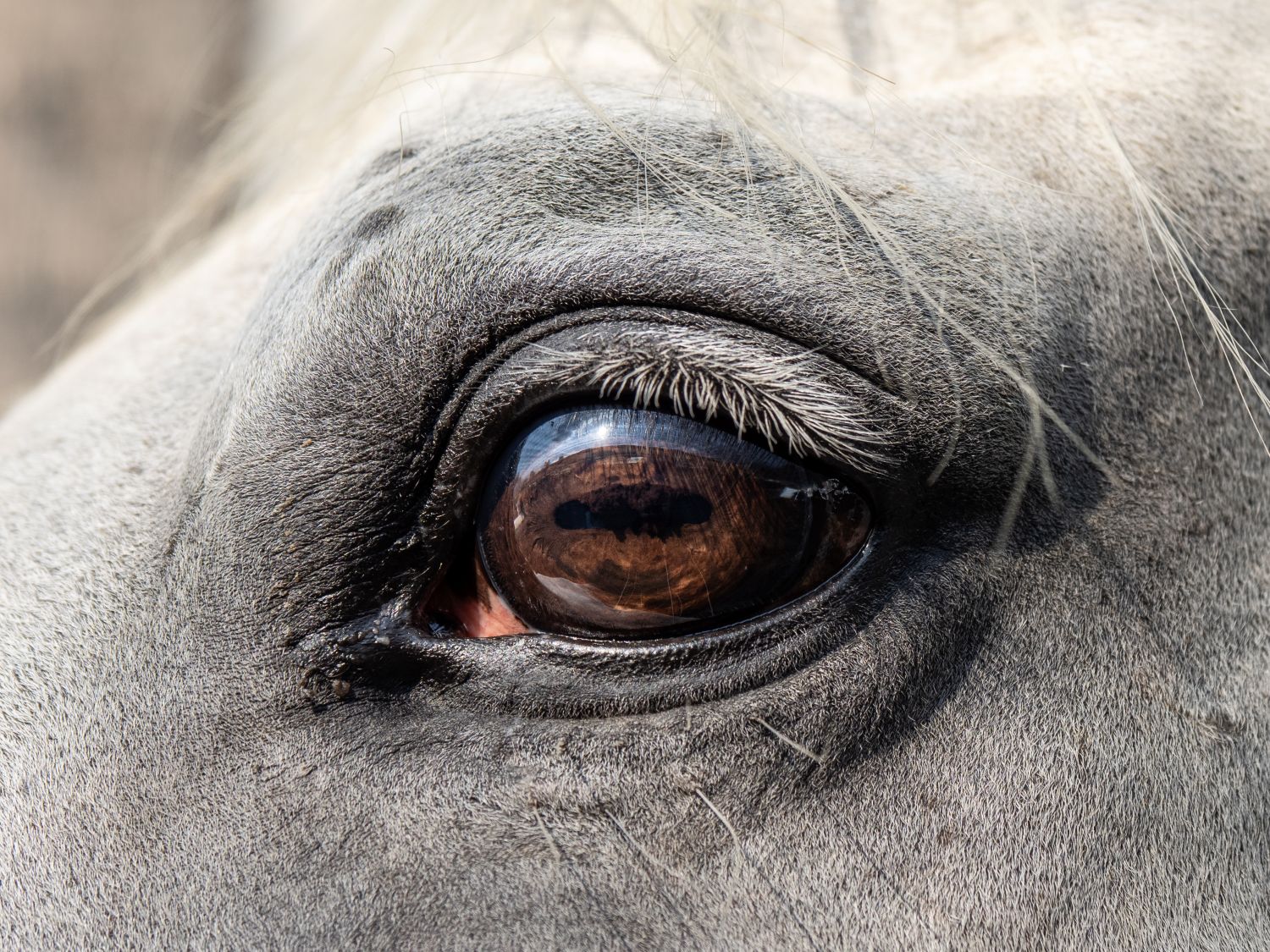
A horse’s eyes are among the largest of any land mammal, measuring around two inches across. Their size allows for excellent light collection, helping your horse see clearly in both daylight and low-light conditions.
Almost Complete Field of View
Because their eyes sit on the sides of their head, horses can see nearly all the way around themselves. The only small blind spots are directly in front of their nose and directly behind them. This wide vision helps your horse stay aware of what is happening nearby and makes them naturally cautious when something moves suddenly into those blind spots.
Independent and Binocular Vision
Horses have what is called monocular vision, meaning each eye can see a separate image. This allows them to monitor both sides of their environment at once. When they look straight ahead, they switch to binocular vision, focusing both eyes on the same point to judge distances accurately. This combination makes horse eyesight both sensitive and adaptable.
How Horses See Colour
Contrary to popular belief, horses are not colour blind. They can see shades of blue and green but not red or yellow. This is known as dichromatic vision. This is why jump poles and arena markers should be painted in colours that stand out from the ground, helping the horse distinguish obstacles more clearly.
Excellent Night Vision
A horse’s large eyes allow more light to enter, meaning they see well in the dark. They can often recognise movement and shapes in low light better than humans or even cats. If your horse calls out to you on a dark evening, it is because he can see you long before you notice him.
Common Eye Conditions in Horses
Even the healthiest equine eye is sensitive and requires care. Early signs of discomfort should never be ignored. Here are some common eye problems and what to look out for.
Equine Recurrent Uveitis (ERU)
Also known as moon blindness in horses, Equine Recurrent Uveitis is one of the most common causes of horse blindness. It is a recurring inflammation inside the eye that can lead to long-term damage and eventual vision loss.
Signs of ERU include:
- Swollen eyelids
- Sensitivity to light
- Cloudy appearance in the eye
- Colour changes in the iris
- Constricted pupil
- Redness around the eye
- Pain, shown by eye closure or increased tearing
- Yellow or green discolouration deep within the eye
Repeated attacks can make the condition worse over time, so prompt veterinary care is essential.
Cloudy Eye
A cloudy-eyed horse may be suffering from infection, injury or the early signs of uveitis. Cloudiness often suggests inflammation or fluid within the eye. Always seek advice from a vet as soon as you notice a cloudy appearance.
Equine Pink Eye
Equine pink eye, or conjunctivitis, causes redness, discharge and irritation. It can be triggered by dust, flies or bacterial infection. Regular cleaning of the stable and good ventilation help reduce the risk of infection spreading between horses.
How to Know If Your Horse Is Losing Vision
If your horse starts bumping into things, reacting nervously to movement or spooking more often, there may be changes in their vision. Common indicators of horse blindness or deteriorating eyesight include:
- More frequent or exaggerated spooking
- Hesitation when moving on uneven ground
- Head movements from side to side
- Difficulty judging distances
If you notice these behaviours, arrange an eye examination with your vet as soon as possible.
Treatment and Long-Term Management
When conditions like moon blindness in horses are diagnosed early, treatment can reduce discomfort and slow down further damage.
Veterinary treatment may include:
- Prescription eye drops or ointments to reduce inflammation
- Anti-inflammatory medications
- Protective masks to filter harmful UV light
- Regular monitoring and follow-up appointments
In some cases, surgery may be considered to remove fluid or damaged tissue inside the eye. If an eye becomes blind and painful, your vet may recommend removal to prevent suffering. Consistency with treatment is vital, as missing doses can trigger another attack and worsen the condition.
Everyday Horse Eye Care Tips
Good daily care can help prevent problems and support your horse’s comfort.
Practical horse eye care tips:
- Check your horse’s eyes every day for redness, swelling or cloudiness
- Gently wipe away any discharge using a clean, damp cloth
- Keep stables free from dust and ensure good airflow
- Protect your horse’s eyes from flies and sunlight with masks or fly veils
- Seek veterinary advice quickly if you notice anything unusual
Horses with light coats or blue-eyed horses may be more sensitive to sunlight. A UV protective mask can prevent irritation and long-term damage.
Protecting the Future of Your Horse’s Vision
Your horse’s eyesight is precious. Understanding how their eyes work, recognising early warning signs and maintaining good stable conditions are the best ways to protect them.
At Prime Stables, we share your commitment to providing horses with safe, comfortable environments where they can thrive in every way. If you would like to learn more about caring for your horse or explore our range of expertly crafted horse stables, mobile field shelters, and equine buildings designed for comfort, safety and well-being, speak to our friendly team today.
Contact our friendly team to request a brochure or arrange a free, no-obligation consultation. Together, we can help you give your horse the very best care.