Before You Begin: Horse Position and Surface
Before assessing saddle fitting, make sure your horse is standing straight on a flat, even surface. Your horse should not be resting a leg, as this will affect their posture and prevent you from accurately evaluating the saddle.
Once the saddle is placed on the back, it must make consistent contact along the horse’s bearing surface. You should be able to look down the gullet and see daylight. The saddle must never touch the spine at any point, because it should be completely free from pressure to avoid discomfort, bruising or injury.
How to Position a Saddle Correctly
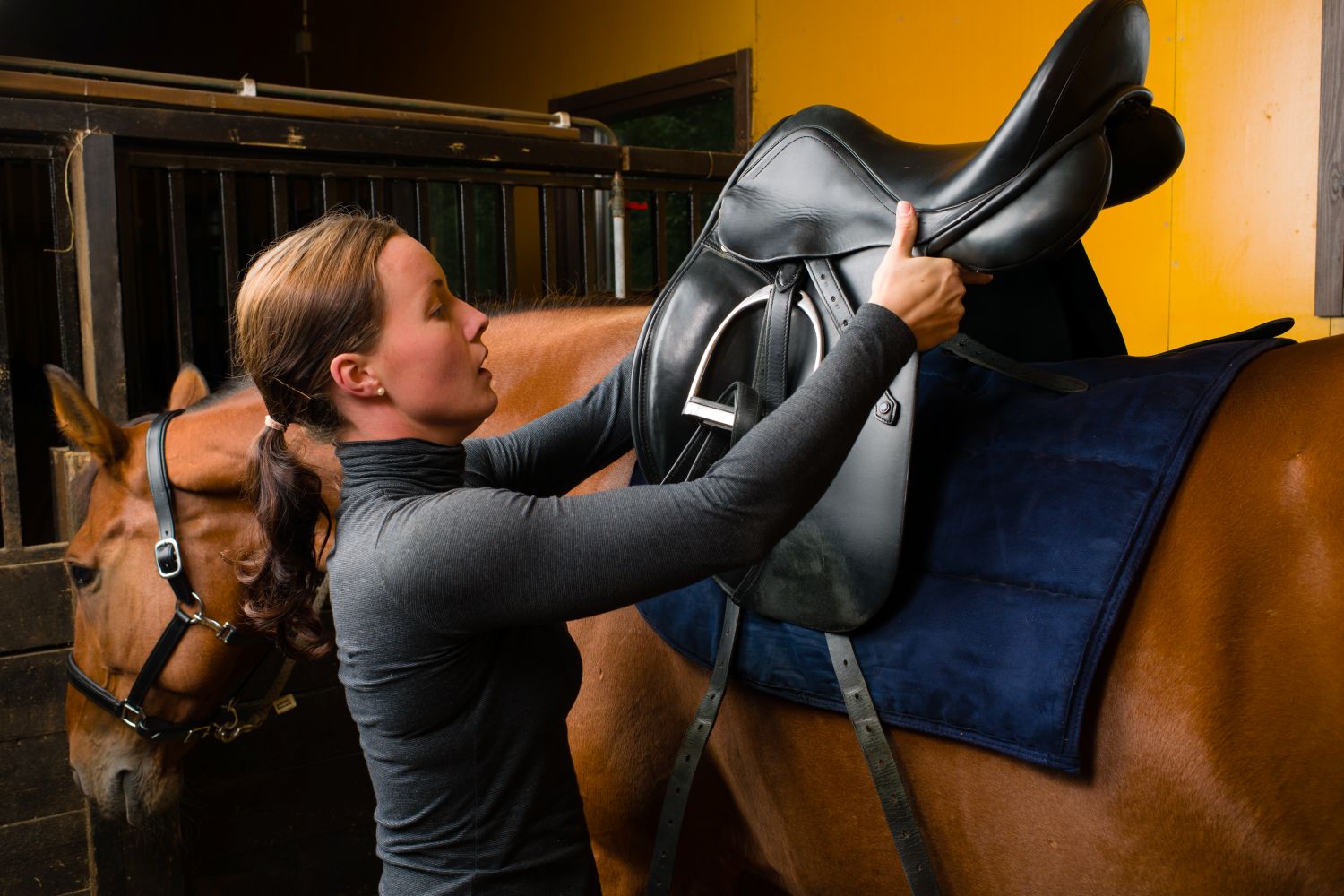
Place the saddle gently onto your horse’s withers and slide it backwards until it naturally stops. This point is your horse’s natural resting place for the saddle, dictated by their body conformation. A correctly positioned saddle will sit just behind the shoulder blades, allowing free movement.
Avoid placing the saddle too far forward. When the rider’s weight is added, a forward-placed saddle may press onto the shoulders, restricting movement and causing discomfort.
Next, check the back of the saddle. It should not sit too far along the back, as horses are not designed to bear weight in the lumbar region. The saddle must sit on a broad, supportive surface with weight distributed evenly.
Regular Checks and Adjustable Elements
A saddle that fits well today may not fit well in a few months. Horses change shape throughout the year as they grow, develop muscle, lose condition or adjust their workload. Behavioural changes, changes in posture, or reluctance under saddle can all indicate that your horse’s saddle fit needs reassessing.
Many modern saddles include adjustable gullets or panels. These can be altered as your horse’s shape changes, helping you maintain the best possible fit without replacing the saddle.
Saddle Price and Quality
Saddles vary widely in cost depending on materials, craftsmanship, and special features. At Prime Stables, we always recommend choosing the best saddle you can afford, especially if it is your first. A high-quality saddle will feel more secure, last longer, and offer far greater comfort for your horse.
Whenever you’re unsure about the fit, always consult a qualified saddle fitter. Professional guidance is invaluable for long-term comfort and performance.
Horse Saddle Care: Looking After Your Saddle
Good horse saddle care protects your investment and keeps your saddle comfortable and safe for everyday riding. Leather saddles are beautiful, durable, and long-lasting when cared for properly. Below are the key steps to maintain your saddle in excellent condition.
Wipe Down After Every Ride
Sweat, dirt and dust accumulate quickly. If not removed, they can cause leather to crack or weaken over time. Always wipe down your saddle with a damp cloth or sponge after every ride. For more stubborn dirt, use mild soapy water and rinse thoroughly.
A regularly cleaned saddle not only lasts longer but also feels better to ride in.
Condition the Leather
Conditioner keeps leather soft, supple, and resistant to cracking. Apply conditioner only when the saddle is dry. How often you condition depends on riding conditions, the type of leather, and overall use. If your saddle feels limp, you may be over-conditioning, which can damage the fibres.
If your saddle is stored for long periods, apply light conditioning occasionally to prevent stiffness.
Use Oil Sparingly
Oiling restores shine and moisture but should be used infrequently. Over-oiling can cause stretching or weakening of the leather. A very light coat two or three times a year is usually enough. If your saddle becomes soaked in heavy rain, apply oil once it has dried to replace oils lost through water exposure.
Store Your Saddle Correctly
To protect its shape, always store your saddle on a proper saddle stand or rack. Avoid placing it on its side or hanging it from ropes, as this causes uneven pressure and long-term damage. Whenever your saddle is stored, cover it to protect it from dust.
Keep Your Saddle in a Cool, Dry Place
Leather is sensitive to moisture and temperature changes. Humidity, in particular, can damage leather fibres over time. Store your saddle indoors or in a dry, well-ventilated tack room during cold, wet, or humid weather. Proper storage helps preserve both appearance and structural integrity.
Conclusion
Correct saddle fitting and proper horse saddle care are key parts of responsible horse ownership. A well-fitted saddle supports your horse’s comfort and performance, while good maintenance ensures your saddle stays in excellent condition for years.
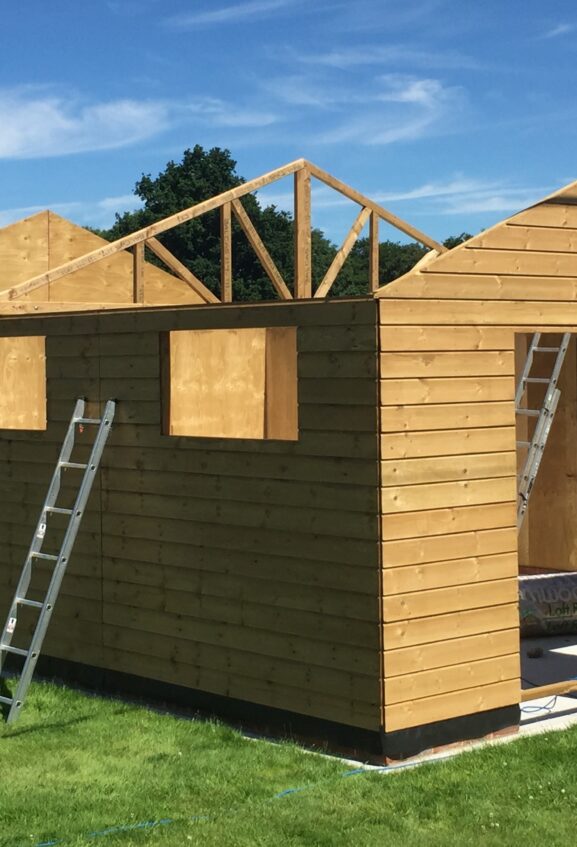
Explore our range of equestrian supplies or contact our team if you’re looking to upgrade your horse’s stables or field shelter. We are experts in crafting and installing timber equestrian buildings across the UK and Europe.